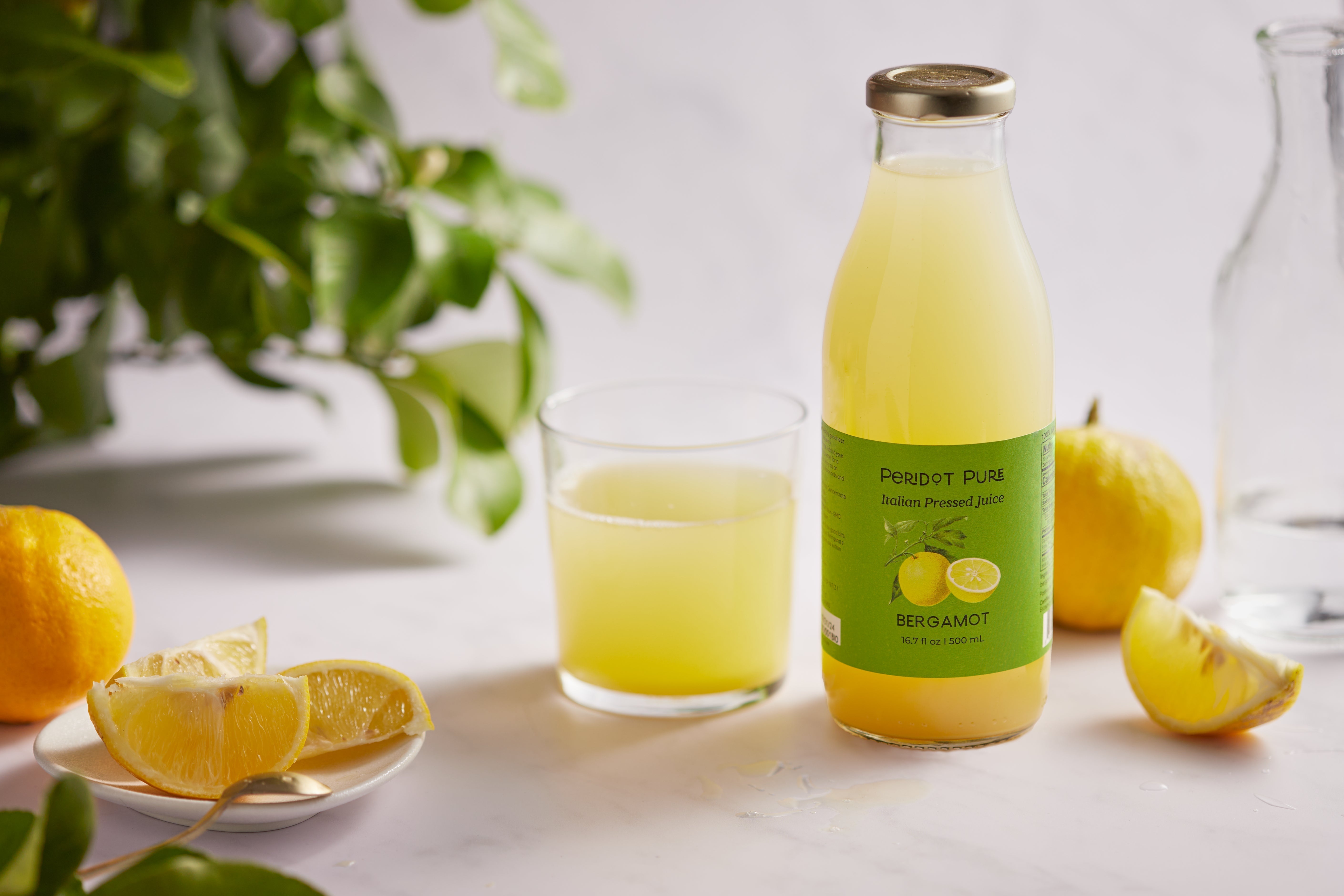
Why Scientists Are Studying Bergamot Juice
The rare Calabrian citrus has long been prized for its distinctive aroma and flavor. Today, researchers are investigating whether its naturally occurring polyphenols may also support metabolic and cardiovascular health.
Bergamot has been cultivated along the sun-drenched coast of Calabria, Italy, for centuries. While the fruit is perhaps best known for flavoring Earl Grey tea and providing essential oils for fine fragrances, another part of the fruit has increasingly captured the attention of nutrition scientists: its juice.
Naturally rich in polyphenols and flavonoids, bergamot juice contains plant compounds that researchers are studying for their potential role in supporting heart, metabolic, and liver health. Although much remains to be learned, a growing body of scientific literature suggests bergamot is one of the most intriguing citrus fruits under investigation today.
What Makes Bergamot Different?
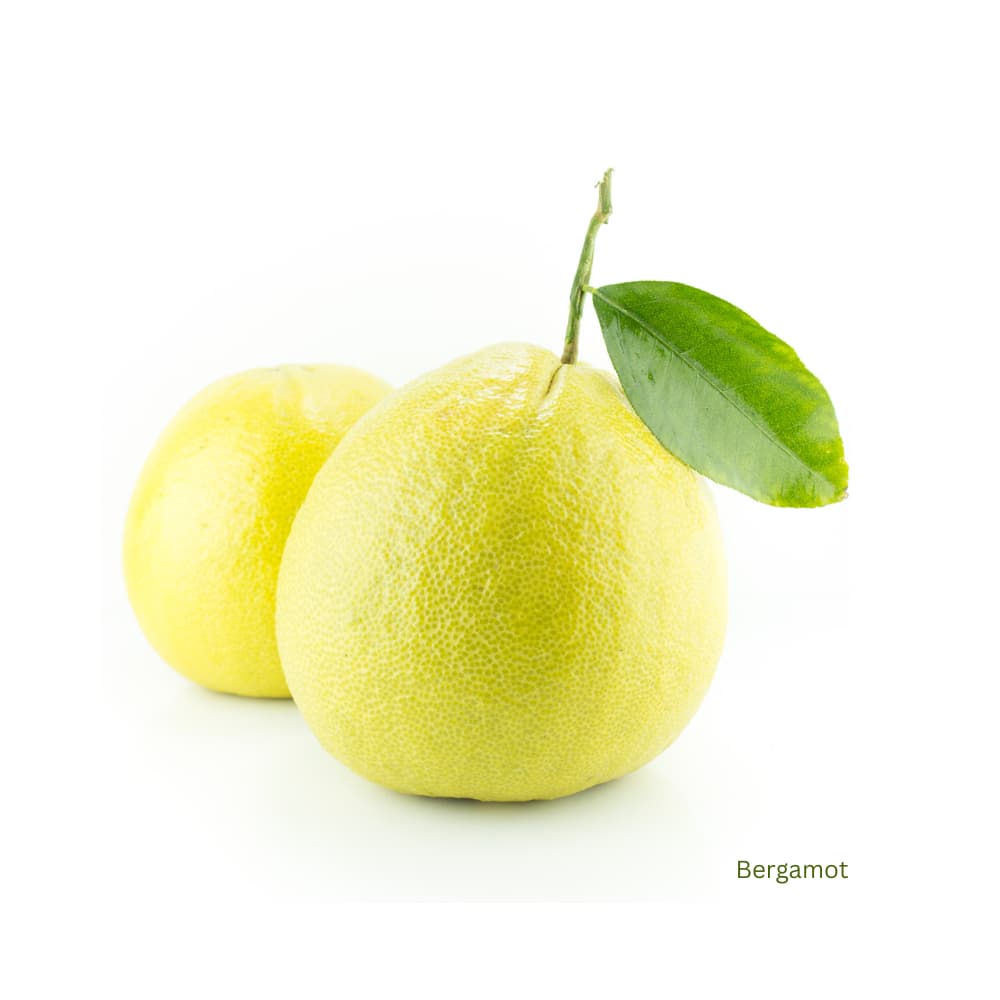
Bergamot (Citrus bergamia) grows almost exclusively in Calabria, where the region's unique climate and mineral-rich soils produce conditions unlike anywhere else in the orld.
Like other citrus fruits, bergamot naturally contains vitamin C and a variety of antioxidant compounds. What makes it especially interesting to researchers is its distinctive polyphenol profile, including flavanones such as:
-
Neoeriocitrin
-
Naringin
-
Neohesperidin
Researchers have also identified two naturally occurring flavonoids—melitidin and brutieridin—that are currently believed to be unique to bergamot. These compounds have become the focus of numerous studies exploring cardiovascular and metabolic health.
An Important Distinction: Juice vs. Extract
Much of the published research on bergamot has been conducted using standardized bergamot polyphenol extracts, not fresh bergamot juice.
That distinction matters.
Extracts provide concentrated, carefully measured amounts of specific polyphenols, allowing researchers to evaluate consistent doses in clinical studies. Whole bergamot juice naturally contains many of these same compounds, but in amounts that vary depending on the fruit, growing conditions, and processing.
As a result, findings from extract studies should not be assumed to apply directly to bergamot juice. Instead, they help scientists better understand the biological activity of bergamot's naturally occurring phytochemicals and identify promising areas for future research.
What Research Suggests About Heart and Metabolic Health
Among the most active areas of bergamot research is cardiovascular and metabolic health.
Several randomized clinical trials involving standardized bergamot polyphenol extracts have reported improvements in markers related to fat metabolism compared with placebo. Participants receiving the extracts also experienced favorable changes in cholesterol and triglyceride levels already within the normal range.*
Additional studies have found evidence suggesting bergamot polyphenols may help support healthy blood sugar metabolism and overall metabolic function.*
While these findings are encouraging, researchers continue to investigate how these effects translate to whole-food forms of bergamot, including juice.
Weight Management and Visceral Fat
Maintaining a healthy weight involves more than the number on a scale. Researchers have become increasingly interested in visceral fat—fat stored around internal organs—which is associated with metabolic health.
In one randomized, placebo-controlled study, participants taking a standardized bergamot polyphenol extract experienced reductions in measures of visceral fat along with improvements in blood lipid profiles.*
Scientists believe these findings may reflect bergamot's influence on normal fat metabolism. However, additional research is needed to determine how these observations relate to consuming bergamot as a food or beverage.
A Promising Area of Liver Research
The liver plays a central role in processing nutrients, regulating metabolism, and maintaining healthy cholesterol balance.
Several studies have found that bergamot polyphenol extracts may support normal liver function by promoting healthy fat metabolism within the liver and helping maintain liver enzymes already within the normal range.*
Because cardiovascular health, blood sugar regulation, cholesterol balance, and liver function are closely interconnected, researchers increasingly study these systems together when evaluating metabolic health.
Could Bergamot Influence the Gut Microbiome?
The relationship between nutrition and the gut microbiome has become one of the fastest-growing fields in health research.
In one laboratory study using a simulated intestinal model, researchers exposed healthy human fecal samples to a bergamot polyphenol preparation to observe changes in microbial populations.
They reported:
-
An increase in Blautia, a bacterial genus associated in previous research with healthy glucose and lipid metabolism.
-
A decrease in Granulicatella, a genus that has been associated with metabolic dysfunction in some studies.
Because this experiment was conducted in a laboratory model—not in people consuming bergamot juice or bergamot extracts—the findings should be considered preliminary. Human clinical studies will be necessary to determine whether similar effects occur in everyday consumption.
Why Polyphenols Matter
Polyphenols are naturally occurring compounds found in fruits, vegetables, tea, cocoa, and many plant foods. They have been widely studied for their antioxidant properties and their potential role in supporting overall health.
Scientists believe bergamot's unique combination of flavonoids may help explain why the fruit has become an important focus of nutrition research. Investigators continue to explore how these naturally occurring compounds interact with pathways involved in cholesterol metabolism, inflammation, oxidative stress, and energy regulation.
As with many areas of nutrition science, however, research is still evolving.
Enjoying Bergamot Juice
Pure bergamot juice has a naturally bold, tart flavor that is considerably more intense than orange or grapefruit juice. Many people enjoy it diluted with still or sparkling water or blended with other juices.
Peridot Pure sources certified organic bergamot from Calabria, Italy, where the fruit has been cultivated for generations. Our juice is produced with minimal processing to preserve the fruit's naturally occurring flavor and phytochemicals.
While the published research surrounding bergamot is promising, scientists continue to investigate how the fruit's naturally occurring compounds contribute to overall health. No single food or beverage determines health outcomes, but incorporating a variety of fruits and vegetables into a balanced diet remains one of the most consistently supported recommendations in nutrition science.
As research continues, bergamot is steadily moving from a little-known Mediterranean citrus to one of the most fascinating fruits in modern nutritional research.
Scientific References
-
Watanabe E, Kuchta K, Kimura M, et al. Effects of bergamot (Citrus bergamia) essential oil aromatherapy on mood states, parasympathetic nervous system activity, and salivary cortisol levels in healthy females. Forsch Komplementmed. 2015.
-
Navarra M, Mannucci C, Delbò M, Calapai G. Citrus bergamia essential oil: From basic research to clinical application. Frontiers in Pharmacology. 2015.
-
Rondanelli M, Peroni G, Riva A, et al. Bergamot phytosome improved visceral fat and plasma lipid profiles in overweight and obese subjects: A randomized placebo-controlled trial. Phytotherapy Research. 2021.
-
Mollace V, Sacco I, Janda E, et al. Hypolipemic and hypoglycaemic activity of bergamot polyphenols: From animal models to human studies. Fitoterapia. 2011.
-
Toth PP, Patti AM, Nikolic D, et al. Bergamot polyphenolic fraction: A 6-month prospective study. Frontiers in Pharmacology. 2016.
-
Gliozzi M, Maiuolo J, Oppedisano F, Mollace V. The effect of bergamot polyphenolic fraction on metabolic parameters. PharmaNutrition. 2016.
-
Gliozzi M, Carresi C, Musolino V, et al. The effect of bergamot-derived polyphenolic fraction on LDL small dense particles. Advances in Biological Chemistry. 2014.
Disclaimer: The statements in this article have not been evaluated by the U.S. Food and Drug Administration. Peridot Pure Organic Bergamot Juice is not intended to diagnose, treat, cure, or prevent any disease.
Editorial Note: This article is intended for educational purposes and summarizes published scientific research on bergamot and its naturally occurring compounds. Much of the clinical research referenced has been conducted using standardized bergamot polyphenol extracts rather than bergamot juice. Additional research is needed to better understand the effects of whole bergamot juice in humans. Individuals with medical conditions or those taking prescription medications should consult their healthcare provider before making significant changes to their diet.